Didi Kern & Philipp Quehenberger, Vienna Shelter, 7 June 2011

Nice to catch a gig at Shelter again. I hadn’t been there for over two years, since checking it out for the Time Out guide, and was relieved to discover that nothing much has changed there in the meantime. Guinness and Strongbow are still on draught, the table football is still there and so is the pinball machine. Not that I was there to play retro games, since Kern and Quehenberger were lined up to make a holy, disciplined racket on drums and synths. And speaking of retro, it seems as though this duo have released their first album on cassette only in an edition of 99 copies which is already sold out. Spare copy, anyone? And maybe you could provide me with something to play it on at the same time. I still haven’t heard that Peter Rehberg cassette I bought a year or two ago.

This was the first time I had heard this duo. Quehenberger was new to me as well, although Kern was known to me from his work with Heaven And, Bulbul and Broken Heart Collector as well as his one-off appearance backing Jandek in 2009. On this occasion he dominated proceedings through an extraordinary barrage of polyrhythmic drumming. Switching with ease between forceful anchored rhythms and out-and-out free sections, Kern made the stage his own to such an extent that Quehenberger at times struggled to make his presence felt. The keyboardist kept things bubbling along nicely enough with attractive riffs and melodies, but Kern’s playing was so intensely fluid and total that there often seemed little room for a second instrument. On the other hand, the physicality of Quehenberger’s approach – playing as though hardwired to the keyboard, practically dancing to the insane reach of Kern’s percussive attack – came as a welcome antithesis to the stereotypical image of the immobile synth man prodding sullenly away.

For the encores the duo were joined by saxophonist Marco Eneidi, leader of the Neu New York/Vienna Institute of Improvised Music, the weekly free jazz blowout at which both Kern and Quehenberger are regular guests. Eneidi’s astringent blasts brought a vivid extra dimension to the music and seemed to lead the keyboard player towards harder, heavier modes of activity. With the warm textures of Quehenberger’s analogue synthesizers melting blissfully into Kern’s infinite rhythms, the duo’s navigation of inner space was as mesmerising as it was heroic.

Donaufestival 2011: Ben Frost, John Cale, Wildbirds & Peacedrums, Nadja

My one and only visit to this year’s Donaufestival kicked off in the Minoritenkirche with a fine performance by Ben Frost, accompanied by pianist Daniel Bjarnason and the Krakow Symphony Orchestra. For this event Frost proposed a meditation on Andrei Tarkovsky’s film Solaris, with video projections created by the absent Brian Eno. Not having seen the film in question, I have no idea as to how either the music or the visuals related to it. The music itself, though, was beautiful: slow, thick melodies that resonated with exceptional clarity around the atmospheric old church, accompanied by Frost’s heavily treated guitar and Bjarnason’s unnervingly calm pianistics.

Over in the main hall later in the evening, John Cale was a severe disappointment. This was a straight-up rock and roll set that evoked none of the dark phantoms I normally associate with Cale. If it’s true, as J. claimed, that you can tell what kind of state Cale is in by the way he goes about “Heartbreak Hotel”, then I should have known the game was up from the way he opened the set with a tiresomely bouncy version of this old chestnut. The briskly competent band were augmented, entirely unnecessarily, by a gospel choir and horn section, while Cale himself was inadvisably clad in a kilt. There were no Velvets songs, no viola and no mystery. It could have been a bar band up there, and I frequently wished it was.

After that ordeal, it was a relief and pleasure to make the acquaintance of Wildbirds & Peacedrums for the first time. The Swedish trio cast a vivid late-night spell with their heady mix of out-there vocals, propulsive drumming and atmospheric washes of Hammond organ. In fact, that dreamlike Hammond-percussion sound put me in mind of another Swedish group, the irresistible Sagor & Swing (and weren’t they supposed to be reforming?). Strange, then, that the organist seems not to be a core member of the band, who generally consist of Mariam Wallentin on vocals and Andreas Werliin on drums. Rounding off the night, Nadja’s slow-moving, heavily treated guitar and bass drones brought an ominous edge of menace and dissonance to the proceedings.

A final tip of the hat to Lucas Abela’s Vinyl Rally installation around the corner from the second stage, a truly inspired and dotty piece of work. A winding racetrack had been set up with hundreds of old LPs covering its walls and floor. A remote-controlled car, which punters were able to control by turning a separate steering wheel, was placed on the racetrack. The car had a camera fitted to its front, the view from which the “driver” could see on a screen in front of him as he attempted to steer the car through the labyrinthine twists and turns of the racetrack. I’m not sure about this, but I think the car was also fitted with some kind of audio pickup so that bits of noise were picked up from the grooves of the LPs as the car drove over them. It was a brilliant idea. And no, I didn’t have a go on it.

2011 Easter Music Picture Quiz: winner and answers

There were over 300 page views of my 2011 Easter music picture quiz, but out of all those people only one could be bothered to enter – the ever-reliable and knowledgeable Maximilian Spiegel of Vienna, who scored 19 out of 20 and wins a small pile of CDs for his trouble. Given the almost total lack of interest shown, I won’t be running this quiz again.

The correct answers were:

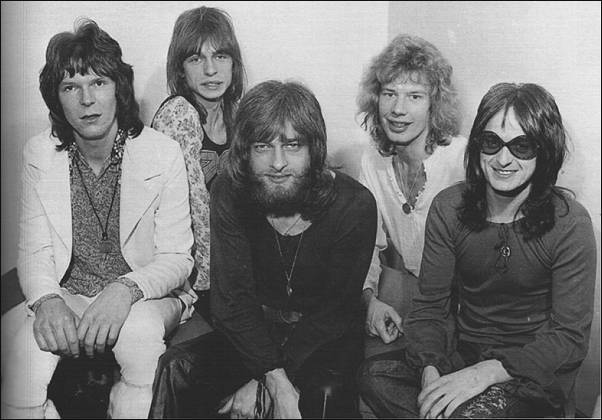
1. Van der Graaf Generator
2. Cowboy Junkies
3. Fairport Convention
4. Tindersticks
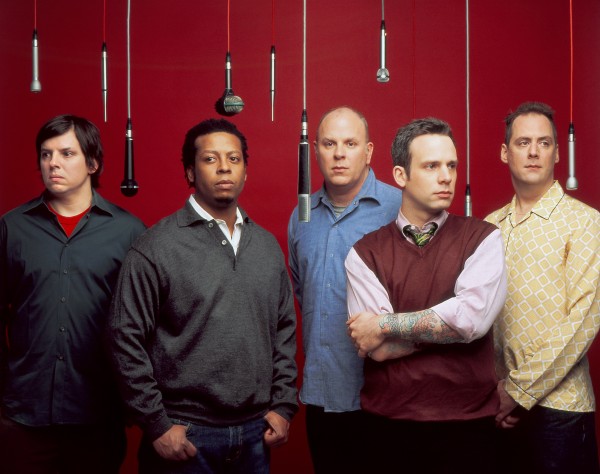
5. The Hold Steady
6. Yes
7. Tortoise
8. Saint Etienne
9. The Thing
10. My Bloody Valentine
11. Throbbing Gristle
12. Naked Lunch
13. 10,000 Maniacs
14. Slowdive
15. AMM
16. The Albion Band
17. Cocteau Twins
18. King Crimson
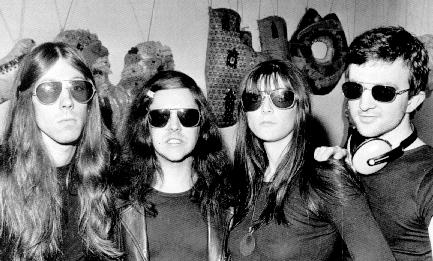
19. Spacemen 3
20. Low

2011 Easter Music Picture Quiz

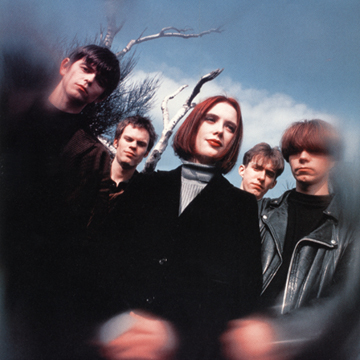
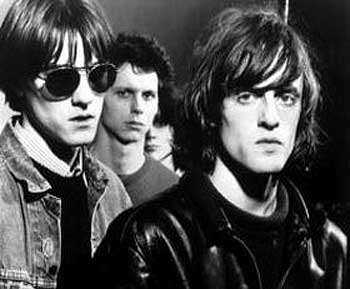
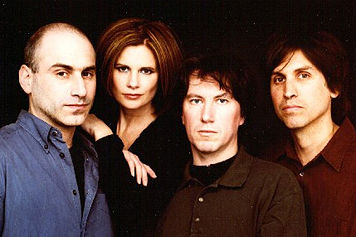
Once again I’m running a music picture quiz to keep your little minds ticking over during the Easter holidays. This year the theme is groups. Some of them are easy, some are hard and one or two of them I think are downright impossible. Identify the 20 groups below and send me your answers (using the form below) by the closing date of Easter Monday, 25 April. There might be a CD or two for the person who gets the most correct answers. Thank you and goodnight.

The competition is now closed, winner and answers here.

1.

1

2.

2

3.

3

4.

4

5.

5

6.

6

7.

7

8.

8

9.

9

10.

10

11.

11

12.

12

13.

13

14.

14

15.

15

16.

16

17.

17

18.

18

19.

19

20.

20

Mats Gustafsson/Martin Siewert/dieb13, Vienna Rhiz, 4 April 2011; Frode Gjerstad Trio with Mats Gustafsson, Vienna Blue Tomato, 14 April 2011

In my review of a concert by Fire Room last year, I bemoaned the fact that there is hardly any crossover between the scenes at the Rhiz and the Blue Tomato, Vienna’s kindred temples to electronic music and free jazz. The observation is no less valid now than it was a year ago. Despite the genial management of Herbie and Günter respectively, and despite the many obvious similarities between these styles of music, it’s rare to see either artists or audience members from one place showing up at the other. So it was a great pleasure to see Mats Gustafsson, who along with people like Ken Vandermark and Paal Nilssen-Love is by now part of the furniture at the Tomato, turning up for what I believe was his first ever appearance at the Rhiz. The gig cemented an association with Austrian guitarist Martin Siewert that goes back to at least last summer, when Siewert’s Heaven And played the closing set at the Gustafsson-curated Konfrontationen festival, and was bolstered last December when the saxophonist joined Siewert for a frenzied blowout at Heaven And’s gig at the Künstlerhaus.

There’s clearly an affinity between the two, then, and it’s fascinating to hear how Gustafsson responds to the presence of another, very different-sounding, lead instrument as opposed to the rhythmic core of double bass and drums he lines up against in The Thing and other groups. On this occasion the duo were joined by turntable and electronics merchant Dieter Kovačič (dieb13), whose malevolent drone-based activity formed a disquieting accompaniment to the guitar and reeds. It was a short set, only 40 minutes or so, but there was still a vast amount going on here. Gustafsson spent most of the set on the deep, resonant baritone sax, switching occasionally to the rare slide sax. Throwing himself into the performance with his usual relish, Gustafsson made the Rhiz his own, challenged only by the endlessly vital and inventive guitar work of Siewert. The guitarist was, as ever, a joy to watch as he moved fluidly between acoustic, electric and tabletop modes; he peels off sheets of squally, thunderous attack with the deranged instinct of Robert Fripp, but trades Fripp’s frosty demeanour for a wholly persuasive openness and sense of fun.

Just over a week later, Gustafsson was the unannounced surprise guest at a gig at the Blue Tomato by the Frode Gjerstad Trio, an all-Norwegian unit consisting of the eponymous Gjerstad on reeds, Jon Rune Strom on double bass and the ubiquitous Paal Nilssen-Love on drums. The first set consisted of the trio only, and it was a pleasure for me to hear Gjerstad play for the first time. Less cerebral than Vandermark, less visceral than Gustafsson or Brötzmann, the saxophonist eschewed a barnstorming approach in favour of clear, ringing lines on alto and clarinet that allowed the bass and drums plenty of space to work their magic. Nilssen-Love’s complex polyrhythms were as brilliant as ever, while Strom was a constantly forceful presence on the low end.

After the interval Gustafsson took up his tenor and Gjerstad immediately deferred to the guest, who laid waste to the room with a long and devastating solo. Things never really let up from that point on. The two reedsmen’s techniques and registers complemented each other beautifully, with Gjerstad’s light and nimble colourations set off against Gustafsson’s fearsomely powerful mid-range assault. This was my last visit to the Tomato before their well-deserved summer break; I’m sure, though, that there will be plenty more such mesmerizing evenings before 2011 is out.

Naked Lunch, Vienna Stadtsaal, 11 April 2011

I was hoping this would be a proper Naked Lunch concert, but unfortunately it didn’t turn out that way. What we got instead was a kind of showcase for their latest project, soundtracking a new theatrical adaptation of Franz Kafka’s novel Amerika. The full production is currently underway in the group’s home town of Klagenfurt; I’m not sure what the deal there is exactly, but I assume they’re playing along to the action much as they did when they performed their live soundtrack to the film Universalove. Those of us in Vienna will have to make do for now with this curious hybrid, at which the group performed only the nine songs from the play, accompanied by a cast of walk-on guests and preceded by a lengthy reading from the novel.

It was great, of course, but it was also a touch insubstantial, and I really hope that after this second successive audio-visual project Naked Lunch get back to being a rock band again. It’s been four years since their last masterpiece This Atom Heart of Ours, and a new album consisting of full band versions of the new songs Oliver Welter premiered at the Radiokulturhaus last year is sorely awaited around these parts. A brief word with Welter after the gig confirmed that such a thing is on its way later this year.

Anyway, tonight’s performance confirmed my long-held view that Naked Lunch are a highly creative outfit with a spiky and uncompromising approach to songcraft. The opening song of the piece, “Let Me Walk Upon The Water”, sets the melancholy tone, with Welter’s haunting and troubled voice framed by Stefan Deisenberger’s desolate keyboard melody. “Fight Club” sees the group hit an angry and convulsive seam, Welter’s vocal swelled by urgent choral backing.

It’s that razor-sharp interplay between voices and instruments that makes this music so compelling, and this was never truer tonight than on “The Tramp”, with its smart lyrical flourishes and impertinently perfect chorus. I have no idea if the English-speaking world will ever wake up to the brilliance of Naked Lunch. As I’ve said before, though, their loss is very much Austria’s gain.

Lloyd Cole, Vienna Casino Baumgarten, 5 April 2011

Lloyd Cole was one of those artists (Suzanne Vega being another; see here for that particular story) whose music accompanied me through my student years. This is no great surprise, of course, since Cole was one of the quintessential British student favourites of the 1980s. Along with groups like the Cocteau Twins, whom I also loved, and the Smiths, whom I greatly disliked, Cole’s three albums with the Commotions must have drifted from more cheap stereos, down more hall of residence corridors, than any other records from that era.

As always, I was playing catch-up. I didn’t cotton on to Cole until 1987’s Mainstream, doubling back later to Rattlesnakes and Easy Pieces. Mainstream seems to be the least regarded of the three, but it’s always been my favourite, being the one where Cole cast off much of his hipster jangle and turned towards a more mature, sombre form of songwriting. And in “From The Hip” and “29” Cole produced what I still think are his two greatest songs. Wistful, troubled and achingly tender, they flagged the direction in which his music would go in later years.

The 1990s was a decade of two halves for Cole (he would no doubt prefer a golfing metaphor to a footballing one, but I know little and care less about the sport). After putting out four fine albums in the first half of the decade, he then released no new material at all in the second half of it. Those four records, though, make up a body of work that for my money is even stronger than the Commotions records. The wit and sparkle were still there, but they were tempered by a certain melancholy and by a leaner, more organic sound that I found, and still find, immensely appealing.

I’ve never exactly got on with Lloyd Cole live, though. The first time I saw him would have been in 1990, when I took my then girlfriend to see him at the Dome in Brighton. I made the mistake of booking front row tickets at this seated venue and was expecting to be able to sit there and watch the gig in tranquillity, not bargaining on the entirely understandable and predictable behaviour of the majority of the audience to rush to the front. I remember thinking that while the performance itself was fine Cole suffered from a distinct lack of onstage charisma, something I’ve also felt every time I’ve seen him since.

The late 1990s must have been a lean time indeed for Cole, as I recall seeing him play a lacklustre solo set to a non-paying crowd of pissed-up expats in an Aussie bar in west London around that time. Thankfully, matters had improved by the next time I saw him on the Commotions reunion tour in 2004, when they played the whole of Rattlesnakes to a large and appreciative audience. Cole managed to elude me from that day until earlier this week, when he rolled up in Vienna with his Small Ensemble.

Once again I had no problems at all with the performance. Cole is a beautiful singer; his voice has this amber quality that, in the pinsharp acoustics of this space, was immediately and deeply affecting. His texts lift the songs away from the humdrum confessional sphere and towards profound emotional territory, while his guitar and those of his two bandmates (who occasionally turned to banjo or mandolin) sparkled like sunrays on calm water. Between songs, however, he was dutiful and perfunctory, only getting really animated when sharing some private joke with the other two. The old routine about having a new album out (“and it’s available just over there!”) was dusted off numerous times and quickly became tiresome, while other attempts at humour fell totally flat: “we could have brought someone on tour with us to tune our guitars, but then we’d have to sit down and eat with him every night” – yeah right, Lloyd, whatever.

At the end of the day, then, it’s a good thing that Lloyd Cole is a singer and not a stand-up comedian. His songs have that rare, precious quality of being beautifully crafted yet fizzing with warmth, energy and good humour. And with a total of 28 songs receiving an airing tonight (although nothing from Mainstream, sadly), no-one, least of all me, could complain of being short-changed.

Godspeed You! Black Emperor, Vienna Arena, 25 January 2011

The return from a lengthy hiatus of Godspeed You! Black Emperor was both completely unexpected and incalculably welcome. Like many others, I suspect, I had assumed we would never see them in active service again, especially since sister project A Silver Mt Zion has taken on more and more Godspeed-like properties in its most recent records. I should have had more faith, for here they were, all eight of them (wasn’t it nine before?), once again forming themselves into a loose semi-circle and pounding out the most beautiful symphonies for the end of the world.

I saw Godspeed at least twice in London, I think, before they disappeared in 2003 or so. I remember very well a gig at the Embassy Rooms, a short-lived and now defunct basement venue on Tottenham Court Road (later a strip club, I believe). Later, after my fellow accountants had discovered them, I saw them at the Royal Festival Hall as well; I recall the gig starting late due to their delayed arrival on the ferry from Dublin, or was that some other group? Whatever the facts of the matter, it’s clear that not much has changed chez Godspeed since those early days. They’re picking up where they left off, essentially, which is something that the most successful reunions (Van der Graaf Generator, Swans) have taken pains to avoid doing. But when the place you left is as noble and thrilling as Godspeed’s was, you can be forgiven for them wanting to return there.

What we got at the Arena, then, was well over two hours of disciplined, multi-layered and engrossing music. Forming the oceanic core of the group’s sound, the guitars, cello and violin would pick out an achingly sad melody, gather solemnly around it and shepherd it gradually towards the blinding light of crescendo, while the thunderous drumming blasted the whole spectacle into the kind of alternate and better reality you feel Godspeed know has to be out there somewhere, if only they could find it. For Godspeed are above all idealists and romantics, finding in post-industrial trauma and decay not the horrors that Throbbing Gristle found, but imagined correlatives for the good, the pure and the hopeful.

I’m sure Godspeed probably played most of their greatest hits tonight, but I’m afraid I can’t tell you what they were. Although I’ve listened to the albums dozens of times, I still have no idea what individual tracks are called; and although I recognized most of the pieces they played, I couldn’t identify any of them by title or tell you which album they come from.

My inability to retain such trainspotterish details doesn’t come as a big surprise to me, it must be said. More than any other group I know, Godspeed operate at a macro rather than a micro level, an approach restated by their steadfast refusal to acknowledge the audience with anything more than the most cursory of nods. Like Test Department (and I hereby call for a Test Department reunion in 2012), another large and faceless collective who used visual projections in their shows, Godspeed understand the seductive power and strength such anonymity bestows. And in deploying that anonymity in the service of such thrilling and beautiful music, Godspeed evoke a timely reminder that all is not yet lost.

Home Service reunite, world says “Who?”

The news that Home Service are the latest group to hit the reunion trail has not exactly set the blogosphere on fire as yet. In fact, apart from a couple of mentions on the websites of those involved and the festivals where they’ve already announced they’ll be playing this summer, there’s been practically no reaction at all, which makes a brief note here all the more imperative.

Why do Home Service matter? Simply because they are one of the finest folk rock groups England has ever produced, right up there with Fairport Convention and the Albion Band. Their slim recorded output may not stack up against those groups’ in terms of quantity, but in Alright Jack and their music for The Mysteries they produced two of the key texts of the genre. And the history and line-up of Home Service is completely tangled up with those of Fairport and the Albion Band in any event. Thankfully, that history is recounted in useful detail here, so I don’t need to go over it again. The point is that Home Service represent the continuation and full flowering of the best record the Albion Band ever made, 1978’s Rise Up Like The Sun. The creative mind mostly responsible for that masterpiece was not Albion Band mainman Ashley Hutchings but Derby singer-songwriter John Tams, one of the unheralded geniuses of English music. Without wishing to devalue the contributions of anyone else, it was Tams’ work as singer and musical director, plus the superbly eloquent electric guitar of Graeme Taylor, that made Rise Up Like The Sun such a massively ambitious yet successful record.

And, needless to say, it was Tams and Taylor who carried that success into their next group, Home Service. The only occasions on which I ever saw them were three visits to the National Theatre in 2000, when they were the house band for Bill Bryden’s The Mysteries. I am so, so glad I made the effort to go to all three of those mystery plays (albeit in the wrong order, and not all on the same day – which would have been completely overwhelming). Together, they represent by far the most memorable and powerful experiences I’ve ever had in a theatre. These were promenade performances, with actors and audience mingling together on the floor of the theatre, and by the end of each play everyone was dancing together to the joyous sound of Home Service, who were playing somewhere above on the balcony.

I wish I could give more of a flavour of those three wonderful evenings, but there is hardly anything to prove that they ever really took place. The plays were never filmed, but the original 1985 production, of which the 2000 production was a revival, was filmed in its entirety and broadcast on Channel 4. Those precious tapes have, however, disappeared somewhere into corporate limbo. Never commercially released on VHS or DVD, they may once have been traded among enthusiasts, but the arthouse film website of which I’m a member currently has no copies circulating. There is also, or at any rate there used to be, a CD available of Home Service’s music for the trilogy.  It’s well worth getting hold of, but it comes nowhere near capturing the ecstatic beauty of Home Service at full tilt.

At any rate, the reunion of Home Service has to be one of my most anticipated musical events of 2011. I can’t see them coming to play in Vienna, nor anywhere else in continental Europe for that matter, so a trip to England is definitely on the cards for sometime this year.

Peter Brötzmann & Fred Lonberg-Holm, Vienna Blue Tomato, 21 January 2011

Peter Brötzmann turns 70 this year, but despite this milestone is showing no signs of easing off on his famously prodigious work rate. In the spring he’ll tour once again with his Chicago Tentet; no Vienna date for that massive big band this time, alas, but then again we were rather spoilt by the three-day Tentet-fest that took place here last November. In the meantime, here he was in a duo setting that was new to me, with American cellist (and Tentet member) Fred Lonberg-Holm. Sounding unlike any Brötzmann gig I’ve ever seen before, it proved a fascinating face-off.

What Lonberg-Holm brought to the party was a somewhat cerebral avant-garde sensibility that marked him out from Brötzmann’s usual collaborators from the worlds of jazz and improv. The cellist spent much of the time crouched low on his chair, reaching down to manipulate his arsenal of effects boxes. He also exhibited a fondness for extended techniques such as manipulating sticks which he had placed between the strings of the cello. Other sections sounded more composed, flowing, romantic even, while at odd moments Lonberg-Holm also showed himself not to be averse to a bit of fuzz-heavy rocking out as well.

Brötzmann responded to this variety of approaches with his customary adroitness and sympathy. Switching from tenor sax to tarogato in the first set, then to alto for the second, he graciously allowed the cellist to set the agenda for the music and was at times unusually restrained as a result. I got the impression that Brötzmann’s playing was vexed by its surroundings, struggling to work itself free from the structures imposed by Lonberg-Holm. As a result, the German’s signature volcanic eruptions were slower to come than usual. When the moment called for it, though, Brötzmann didn’t hesitate to reach deep inside and produce a solo of staggering incandescence and vitality. He’s still the master at 70, and if anyone is insolent enough to ask how long he can continue like this, these words (taken from a 2000 interview) should provide all the answers they need:

If I said at the time and if I still say it today, that we’ll just play until we drop, it’s not because we’re heroes. We have to. There isn’t much else for us to do but to carry on playing. You don’t make a fortune playing this kind of music. I just hope that I’m aware of it when my head and my body aren’t fully there anymore and that I can afford to say, Brötzmann, that was it – the rest I’ll keep to myself.