Short Cuts 3: Autechre, Russell Haswell, Jarboe, Modell Doo

The third in an occasional series of handy bite-size reviews of shows I don’t have the will or, more pressingly these days, the time to write more about.

Autechre & Russell Haswell, Vienna Flex, 30 March 2010

Mesmerising night of electronic wildness, at a venue whose pristinely loud sound system I love almost as much as the eye-poppingly beautiful nature of many of its clientele. Russell Haswell – at least one supposes it was him, although it was impossible to tell given the baseball cap pulled down low over his face – came onstage just before midnight and made a huge and inspired racket for just ten minutes. Crushing drones collided with sick frequencies in a synapse-cleaning curtain-raiser to the main event.

Autechre were superb. Their precise, mechanistic sound could so easily have descended into a dry, sterile exercise; not a bit of it. This music was endlessly vital, bubbling and, oh yes, hot.

Jarboe, Vienna Chelsea, 12 April 2010

An all-too-brief setting of Jarboe’s powerful, otherworldly voice against a churning Metal soundscape. The Chelsea’s murky acoustics couldn’t dispel the hypnotic intensity of this, less a performance than an invocation.

Neonbeats, Vienna Replugged, 24 April 2010

Fun evening of Austrian new wave and post-punk revivalism to celebrate the release of a new, extensive compilation of this stuff on Klanggalerie. Of the four groups I saw, the only one that made a really lasting impression were Modell Doo, a synth/guitar and drums duo who played with a sharp, brittle passion.

2010 Easter Music Picture Quiz: winner and answers

Congratulations to Maximilian Spiegel of (where else?) Vienna for winning my Easter music picture quiz. Max stormed home with an admirable score of 19/20 and will be receiving a package of CDs in the post. Thanks to all those who sent in entries.

The correct answers are:

1. Peter Brötzmann
2. David Tibet
3. John Cale
4. Hermann Nitsch
5. Genesis P-Orridge
6. Michael Nyman
7. Ken Vandermark
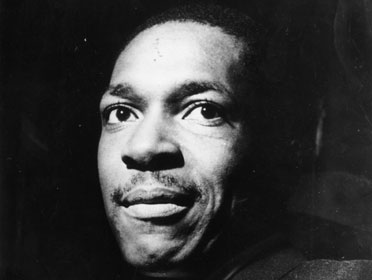
8. John Coltrane
9. Roger Waters
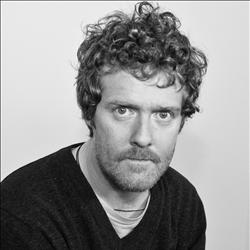
10. Glen Hansard
11. Joni Mitchell
12. Peter Rehberg
13. Carla Bozulich
14. Mark Kozelek
15. Christian Fennesz
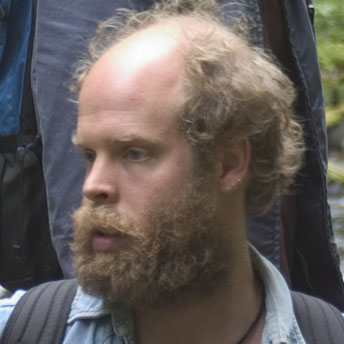
16. Will Oldham
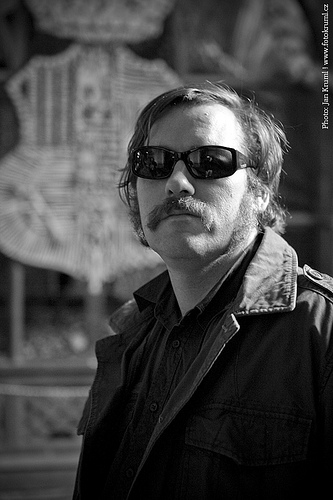
17. William Bennett
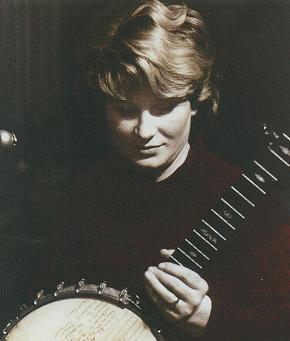
18. Shirley Collins
19. Albin Julius
20. Mats Gustafsson

Easter 2010 Music Picture Quiz

For the third year running I’m posting a fiendishly difficult music-related picture quiz for Easter (see 2009’s quiz and 2008’s effort). Identify the 20 artists in the pictures and send me your answers (using the form below) by the closing date of Easter Monday, 5 April. I might even have a few CDs to send out as prizes. Now go.

The competition is now closed, winner and answers here.

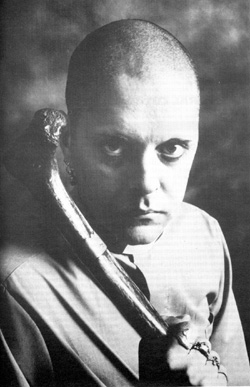
1.

pic1

2.

 pic2

3.

pic20

4.

pic15

5.

pic19

6.

pic18

7.

pic12

8.

pic16

9.

pic14

10.

pic13

11.

pic17

12.

pic9

13.

pic7

14.

pic5

15.

16.

pic6

17.

pic4

18.

pic3

19.

pic8

20.

pic11

Swedish Azz, Vienna Echoraum, 28 February 2010

Fascinating and highly unusual evening of not-quite-free jazz from ace Swedish saxophonist Mats Gustafsson, three of his fellow countrymen and Viennese ringer dieb13 (Dieter Kovacic). The deal here is a contemporary take on Swedish jazz of the 50s and 60s, transplanting that music’s strong melodic lines and sense of lyricism into the context of improvisation and electronic soundscaping. It could have ended up as a right old mess, but in the event it was a thoroughly convincing performance, due in no small part to the exhilarating urgency of Gustafsson’s saxophone work.

In marked contrast to the long, sweeping improvs we normally see from Gustafsson, these pieces were short, tightly focused and – at least in part – notated. The saxophonist took the trouble to introduce each piece, carefully and humorously introducing the composer and his place in the history of Swedish jazz. It was clear that the group love this music and were there, more than anything else, to pay homage to it.

Judging by the intentness with which Gustafsson, tuba player Per-Åke Holmlander and vibraphone player Kjell Nordeson were studying their music stands, the notated elements were important to the overall structure of each piece. As a result, the pieces tended to begin steadily, with the warm tones of the vibraphone bringing colour and light into the room. It wasn’t ever long, though, before the group ceased to rely on their sheet music and ventured into the realm of pure improvisation, with Gustafsson’s sax playing as wild and torrential as it is in The Thing and Sonore. Taking the occasional break from this vein-bursting activity, he manipulated various bits of table-top electronics to produce clouds of unforgiving noise. Kovacic’s own interventions on turntable and electronics unfolded slowly and unnervingly, while Nordeson’s vibraphone weaved miraculous patterns around this stormy weather.

I still don’t get the point of that missing J, though.

Ulver, Vienna Arena, 23 February 2010

Not a group I know very much about, this, but I was sufficiently intrigued by Ulver‘s reputation to check them out at the Arena last week, and was highly impressed by the power and intensity of their performance. Seemingly with their roots in black metal, they appear to have abandoned that particular creative cul-de-sac in favour of an uncanny and highly original synthesis of avant rock, prog, noise and electronics. As is often the way with music I’ve never heard before, I found myself groping for reference points, and was initially befuddled by clashing impressions of Pink Floyd, King Crimson and late-period Coil. Things started to make more sense when I realized how close elements of Ulver’s sound were to the more liturgical moments of Dead Can Dance, with the same atmosphere of metaphysical grace and eerie, otherworldly detachment that I loved in that fondly remembered duo.

More striking still were the similarities with Towering Inferno’s Kaddish, a mostly forgotten, hugely powerful multimedia project that I had the privilege of seeing twice in London in the early 90s. Described as “a dream history of Europe in the wake of the Holocaust”, Towering Inferno used back-projected film montages alongside pulverizing rock music, Jewish chant and serene eastern European folksong to shattering effect. I was more than once reminded of Kaddish while watching Ulver, whose use of film (Nazi rallies, death camps, pornography, bloodthirsty wild animals and so on) as a visual accompaniment to the music was frequently devastating.

None of these lazy comparisons are intended to detract from the uniqueness of Ulver as a proposition. Urgently driving these short, potent songs, the dense, riffing guitar was offset by plaintive, haunting vocals and sonorous keyboard lines. I found this music to be affecting in a strange, almost dehumanized way, insidious in its ability to channel atmospheres that many people would prefer to remain dormant.

Ken Vandermark/Paal Nilssen-Love/Lasse Marhaug, Vienna Blue Tomato, 20 February 2010

One of the things I occasionally rant about in my more intemperate moments on these pages is the inability of avant rock and noise fans to understand that the qualities they supposedly value in those musics – dissonance, atonality, extremity and so on – are also present in abundant quantities, and far more interestingly, in free jazz, a genre in which they have no interest. How else to explain the fact that there is practically no crossover between the regular audiences at the Rhiz and the Blue Tomato, Vienna’s kindred temples to these respective musics. What prevents people from making this leap of faith, of course, is the appalling image under which jazz still labours in the rock world. I’ve even heard the nonsensical claim being spouted that The Thing are “the jazz band it’s OK to like”, as though all it takes is a guest appearance from Thurston Moore to save one fortunate group of musicians from the opprobrium deservedly heaped upon their peers.

What did we have at the Blue Tomato last Saturday, then, but a concert by Fire Room, a collaboration between free jazz titans Ken Vandermark on reeds and The Thing drummer Paal Nilssen-Love on the one hand, and noise/turntable maverick Lasse Marhaug on the other. And what do you know? The Tomato is frequently sold out for these big free improv clashes, but on this particular occasion it seemed even more rammed than usual – and was it my imagination, or were there an unusually large number of young hipsters in the audience, no doubt there to see Marhaug? All well and good to get some crossover going, perhaps, but I’ll reserve judgement until I see those same hipsters returning to the Blue Tomato for an improv session that doesn’t involve a lugubrious bloke in a Napalm Death T-shirt sitting at a table, twiddling dials and scowling.

Anyway, this concert was in many ways a more exacting version of the Vandermark/Nilssen-Love duo show at the same venue last November. The mighty confidence and exuberance of that evening was still in ample evidence but there was a harder edge to proceedings as well, due in no small part to the lowering presence of Marhaug. Deftly manipulating a turntable, a laptop and some kind of analogue console, Marhaug unleashed wave after wave of sonic detritus which battled for supremacy against Nilssen-Love’s thunderous percussive attack and Vandermark’s wonderfully varied reed work.

Vandermark impressed me hugely on this occasion, I have to say. Writing about the show in his Facebook diary (a fascinating read, by the way, and a fine illustration of how much this tireless traveller thinks and cares about the music; the Musician documentary is highly recommended for the same reason), he expressed the concern that his acoustic playing might have been overwhelmed by the drums and electronics. He needn’t have worried; the endless twists and turns of his sax and clarinet solos came over loud and clear. Whether he launches into a surging, irresistible groove, alights on a moment of stark beauty or unleashes a spectacular passage of circular breathing, Vandermark is surely the most inventive and creative saxophonist in the world today.

The Swell Season, Vienna Museumsquartier, 10 February 2010

Absolutely wonderful evening of passionate, finely wrought folk rock from the gifted Glen Hansard and his group. And yes, this is very much Hansard’s night, despite solo turns from Marketa Irglova and the violinist. Their spots were very pretty, but you just wanted him to take centre stage again and electrify the place. Which he did, with every single song.

Where on earth have The Swell Season sprung from? In the first place, this concert was sold out weeks in advance and I only just managed to secure tickets. I’d never been to Halle E of the Museumsquartier before, and I thought it was going to be some cosy little theatre. Imagine my surprise, therefore, to find that it was far, far bigger than I had expected, with rows of seats going way back and a huge buzz around the room. I guess this is an example of (richly deserved) success being gained through word of mouth rather than hype; granted I’m not exactly an avid consumer of entertainment media, but I’m unaware of any huge promotional effort being made by, about or around this group. Hansard’s other outfit, The Frames, aren’t exactly megastars either, so I can’t imagine that the audience for this show consisted mostly or even largely of Frames fans. And as for Once, the film that first brought Hansard and Irglova to the attention of the wider public – was it really that much of a success? I never tire of telling anyone who will listen (and many who won’t) that I saw the film at the cinema well before its Oscar success (see here), but it’s plainly one of those films that has had a long afterlife on DVD.

In any event, Hansard is a stunningly powerful singer, songwriter and guitarist. His voice has this quality of epic yearning fuelled by the passion of his songs and by the flawless musicians around him. He exudes a ragged intimacy with his beat-up old guitar and warm-hearted, likeable stage presence – but there’s absolutely nothing perfunctory or indifferent about his performance. A solo version of Van Morrison’s “Astral Weeks” was powered by unbelievably fast-paced and frenzied guitar work, while another solo song was taken off-mike, taking the entire audience into rapt silence. A good-natured, tongue-in-cheek encore of “Rock Me Amadeus” brought the audience to its feet, while the last song saw Hansard tearing at his guitar with such force that every string was broken. Having no more to give, having given so much, the concert ended – an evening of endless exquisite highs, and an early contender for show of the year.

The Australian Pink Floyd Show, Vienna Stadthalle, 8 February 2010

Something of a guilty pleasure for me, this, but it was an evening I found impossible to resist. Pink Floyd were, at one time, the most important group in the world for me. I remember discovering them in 1983, around the time The Final Cut was released. My teenage obsession with Gary Numan had pretty much run its course by then, as Numan was still wilfully and stupidly insisting on leaving behind the electropop that had made him great in favour of long, uninspired excursions into pallid white funk. It was clearly time for me to jump ship.

I latched onto Pink Floyd as a direct result of the marketing and promotion for The Final Cut. Not having heard a note of their music (except for “Another Brick in the Wall Part 2”, of course), I was for some reason intrigued and attracted by the stark lowercase text on the album cover and posters, and by the general air of mystery the cover exuded. When I bought it and the needle dropped down on “The Post-War Dream” for the first time, I immediately felt that this was music I’d been waiting all my life to hear. Slow, dark, serious and strangely moving, the song made an impression on me which has never dissipated, and the whole of The Final Cut still has the same effect.

Over the next few months I doubled back and quickly devoured every single Pink Floyd album, finding in particular Dark Side of the Moon, Wish You Were Here, Animals and The Wall to be every bit as mysterious and troubling as The Final Cut had been. In its glacial pessimism and its grim sense of psychological trauma, this was music for grown-ups, and listening to it made me feel less of a child than I had been before.

In the ensuing battle between Roger Waters and David Gilmour over who was the rightful owner of the Floyd legacy, I placed myself firmly in the Waters camp. As a huge generalization, vocals and lyrics have always been more important to me than music (cf. Peter Hammill). I knew Gilmour was a great guitarist, but I also sensed that most of the Floyd moments I cherished stemmed from Waters’ lyrics, concepts and sense of drama, not from Gilmour’s admittedly miraculous guitar. The contemptible A Momentary Lapse of Reason only served to confirm this, while Waters’ brilliant Radio KAOS was a record I returned to many times.

It’s a matter of great regret to me that I never saw Pink Floyd live. I sometimes ask myself who I would most like to have seen live that I never did and now never will, and Pink Floyd’s The Wall show would certainly be at or near the top of the list (Joy Division would be the other serious contenders, since you ask). Waters’ Radio KAOS show was hugely enjoyable (by a stroke of massive good fortune I ended up with tickets for the front row of Wembley Arena, and I was even the “lucky” person on whom the spotlight shone when Waters shrieked “STAND STILL LADDIE!”). The Gilmour-led affair that I snoozed through at Wembley Stadium the following summer, though, was such an abomination that I refuse to even recognize it as a Pink Floyd concert.

These, then, are some of the reasons why I ended up watching the Australian Pink Floyd Show at the Stadthalle’s Halle F (a much more pleasant venue than I’d expected, to be honest). Watching this constantly thrilling, immaculately performed facsimile, it suddenly dawned on me that this group was no less Floyd than the Waters-less (Watered down?) version of Floyd had been. OK, so it didn’t have Gilmour, Nick Mason or Richard Wright, as the 1988/1994 touring Floyd had done; but that band had those people in, and it still wasn’t Floyd. And so, apart from the fact that “Brain Damage/Eclipse” was unaccountably omitted from the set whereas no fewer than three atrocities from the Gilmour period were performed, I have no complaints.

Peter Hammill, Linz Posthof, 20 January 2010

“I believe that, with regard to both the tragic aspect of suffering and instances of extreme ecstasy and affirmation of life, art needs to have a sense of sacred solemnity.” (Hermann Nitsch)

This was a stunning opening to the 2010 concert-going season. Since, for whatever reason, Peter Hammill didn’t make it to Vienna on his European tour, it was a no-brainer to make the short journey over to Linz for my first visit there. The venue, the Posthof, was a very pleasant place indeed, not least because of its wacky location in what appeared to be an industrial estate on the bank of the Danube, miles from the centre of town. Good vibes, nice food, laid-back management (I was able to reserve a seat in the front row by the simple expedient of walking into the hall before the doors opened, while others were able to wander in and listen to the soundcheck), perfect acoustics and a lovely Bosendorfer grand piano for Peter to play. If only all venues could be like this.

Continue reading

Letter to The Wire, January 2010

Thanks to Joseph Stannard for his comprehensive King Crimson survey, although he showered a little too much love on the 1981-84 incarnation of the group for my liking. Where Stannard hears “a hive of small sounds in constant motion”, I just hear Adrian Belew needlessly emoting over pallid jackets-with-sleeves-pushed-up funk, all the while playing guitar to sound like an elephant – and not in a good way, either.

Crimson don’t need a second guitarist, as is amply demonstrated by the ProjeKcts albums (on which Belew played V-drums). Stannard could have said more about these releases, which showcase Fripp’s most satisfying and avant-garde work since the 70s. According to Fripp, the ProjeKcts were supposed to serve as “research & development” for Crimson, but given that so few of the resultant approaches made their way into later Crimson albums the validity of this statement must be in doubt. Fripp could easily have gone against the grain of his audience’s expectations by keeping up with the mix of volatile Improv and irresistible electronic dance beats that characterised the ProjeKcts sessions. What irks me is that he chose to play it safe the next time he went out as Crimson – discarding the innovations of the ProjeKcts and retreating instead into a greasy rehash of former glories.