Acid Mothers Temple/Ruins/TV Buddhas, Vienna Fluc Wanne, 6 May 2008

Barely pausing to draw breath between the Donaufestival and the 10 years of Rhiz celebrations, I descended into the Stygian gloom of the Fluc Wanne for an event billed as the ‘Japanese New Music Festival’. This was a rather grandiose description for what was essentially a programme of solo and duo performances by the two Japanese musicians present (Makoto Kawabata of Acid Mothers Temple and Yoshida Tatsuya of Ruins), with a non-Japanese guest band (TV Buddhas) plonked somewhere in between. The possibility of more varied permutations was scuppered due to the absence through sickness of the third member of the troupe, Tsuyama Atsushi.

Despite the slimmed-down line-up, Kawabata and Tatsuya presented an extremely wide variety of sonic approaches; closing the eyes, one could easily have believed that there were more than just two people onstage. The evening began underwhelmingly, though, with a rather Fluxus duo performance during which the two men used bottles, vegetables and other unconventional “instruments” as sound sources. Clever, I sighed, and waited for the actual music to begin. And begin it did, splendidly so, as Tatsuya performed a solo drums set filled with complex, progressive textures. Don’t ask me how he did it, but the percussion was accompanied by guitar and keyboard sounds, all of which were somehow triggered by the drummer in real time.

Next up, Kawabata took the stage for a solo guitar set. The guitar was initially bowed, offering up clouds of extended drones that shifted and coalesced beautifully into each other. A simple folkish pattern was then sampled and looped, creating a sparkling basis from which Kawabata brought forth dense clusters of electric activity.

The evening then took a somewhat surreal turn. A space in front of the stage was cleared, and TV Buddhas set up their stall in the round, facing down the audience at the same level. A male/female guitar/drums duo, TV Buddhas bore a certain family resemblance to the White Stripes, but it quickly became clear that they were able to reach far deeper into the well of inspiration than that blighted couple. The group’s set hovered adroitly between rock and noise, often teetering on the brink of freeform workouts before being hauled back into the realm of disciplined, focused activity. With the guitarist and drummer both a matter of inches away from the audience, their playing reached out easily and made an immensely favourable impression.

Rounding off the night in fine style, Kawabata and Tatsuya joined forces again for a fast-paced, frenetic and gloriously loud set as Acid Mothers Temple. A brisk walk home from Praterstern and the evening was done.

Tortoise/Naked Lunch, Donaufestival, 3 May 2008

These pages are backed up because there has been so much going on lately. Normal service will be resumed as soon as possible. Backtracking…

My second and last visit to the 2008 Donaufestival was a far more positive and pleasant experience than the previous one had been. The evening opened at the Minoritenkirche with Universalove, a film by Thomas Woschitz with a live soundtrack by Austrian alt-rockers Naked Lunch (for more on whom, see my March 2007 column).

This event was marvellously engrossing from start to finish. The film was a collection of thematically linked stories focusing on love and relationships, each of them quietly eloquent in its own way. The accompanying music was no mere incidental backdrop, but a series of emotive, quietly devastating songs that informed and commented on the narratives. The main musical impetus came from the percussion, with the two drummers standing centre stage and bashing out beautifully immersive and textural rhythms. The wintry and plaintive vocals, meanwhile, contributed an air of dark melancholy to the film. This highly impressive collaboration was an indication that the somewhat jaded live soundtrack genre still has the potential to mesmerise.

One minor gripe: the seating arrangements in the Minoritenkirche were bizarrely ill thought out. Despite the fact that the event was very well attended, the organisers for some reason decided to lay out only twenty or so rows of seats in front of the stage, leaving the rest of the church as standing room. Having arrived fairly early, I was lucky enough to grab a seat, but it looked to me as though the majority of the audience was left to stand uncomfortably around. Why the entire church couldn’t have been given over to seating is utterly beyond me. This was a film, after all.

Over in the main hall later in the evening, a similar thoughtless disregard for the needs and comfort of the audience saw Tortoise come onstage at the absurdly late hour of 1.30am, by which time I had already been bored stiff by the wearisome sermonising of Ursula Rucker and the stilted meanderings of Xiu Xiu. Anyway, Tortoise were fantastic, insofar as I was able to stay awake and listen to them. Their last record It’s All Around You may have been a tepid approximation of former glories, but onstage the combination of the two drummers (again) with the jazzy guitar and vibes remains as potent and telepathic as ever. Kaleidoscopic, fresh and startlingly original, Tortoise music is pretty damn irresistible; but it would have been good to take it in through eyes and ears that weren’t pleading for some downtime.

Satan Mozart Moratorium, Krems Donaufestival, 1 May 2008

This year’s Donaufestival was a much more low-key experience for me than the stellar programme that was served up last year (which, lest we forget, included Current 93, Nurse With Wound, Throbbing Gristle, Will Oldham, KTL, Six Organs of Admittance, Larsen, the Boredoms and many others… has there ever been a better festival line-up, anywhere?). There was no way the organisers could have topped that this year, and in fairness they didn’t even try. This year’s festival concentrated heavily on theatre and performance art, with a strong showing of newly commissioned works. Inevitably, therefore, the musical side of the programme took something of a back seat.

In fact, the first show I saw this year was a performance piece, Satan Mozart Moratorium by Jean-Louis Costes and Paul Poet. And I rapidly wished I hadn’t bothered. Like the fool I am, I only ventured to see this effort because of an “article” in the crappy Vienna “newspaper” Heute which described its “scandalous” content in lascivious detail. You pillocks, I thought, it’s only you who think it’s a scandal, no-one else is bothered by it in the least. Anyway, I made the effort to go because I was hopeful of some testing actionist-style engagement from the performers. Boy, was I ever mistaken.

Before the performance began, the audience had to sign a disclaimer. I’m not sure exactly what I was signing, but I do know that it partly involved confirming that I understood I was about to witness a pornographic show and, more worryingly, that no liability would be assumed for any dry cleaning costs incurred as a result of watching the show. That done, we were escorted round the back of the building to an anonymous hall and kitted out with pacamacs, presumably to protect us from all the literal and metaphorical debris we were about to be confronted with.

I have to confess to the reviewer’s cardinal sin here – N. and I left well before the end. But we had seen enough to know when we had backed a loser. This was a loud, arch and orotund show in which the three actors bawled at the tops of their voices in between prancing mostly naked around the performance space, twisting themselves into contortions, throwing grapes at each other and capering pointlessly among the seated and cowering audience. The narrator at one point exhorted us to “f*** your children”, an unnecessarily antagonistic statement even without the knowledge of the horror of Amstetten which emerged the following day. But you didn’t need to be a parent to find this piece tiresomely and tediously one-dimensional. Like many of the audience, we voted with our feet and left early. One of the crew members filmed our departure, probably thinking to himself “ha, another couple of wimps who can’t cope with this fearlessly confrontational, transgressive piece.” But that wasn’t why we left at all. We left because we were bored rigid and we knew we would have a better time at the bar.

Ether column, April 2008

It was always going to be difficult for this year’s Donaufestival in Krems, Lower Austria, to follow the exceptional line-up of last year’s event. However, there are still plenty of worthwhile performances on the schedule at this most stimulating of festivals. The pick of these has to be the visit of American group Tortoise, who will grace the stage with their slinky and graceful instrumental music. Tortoise are often described as ‘post-rock’, a label which, like many such categorisations, has a kernel of truth at its core. In the early 90s, a time when rock music was in thral to Britpop and grunge, Tortoise emerged playing a music that seemed determined not only to sidestep but to supersede those essentially retrospective approaches. Incorporating elements of jazz, easy listening and dub reggae, Tortoise music achieves the rare feat of appealing to the listener’s head and feet at the same time.

Two evenings later, Connecticut’s Magik Markers drop by in support of their recently released album Boss. The Markers are an unruly noise-pop duo consisting of drummer Pete Nolan and singer/guitarist Elisa Ambrogio, who doubles as the life and music partner of Six Organs of Admittance’s Ben Chasny. Joining Chasny on stage for a short, incendiary set at last year’s Donaufestival, Ambrogio demonstrated a glorious ability to shred the hell out of her electric guitar with blasts of intelligent, well crafted noise, mirroring much of the Markers’ previous output (which consisted of one ‘proper’ studio album and a long series of self-released CD-Rs). Boss, however, sees a strong redefinition of the Markers’ approach. It’s a remarkably diverse set of songs, with Ambrogio’s seductive voice reaching out over Nolan’s fiery percussion and occasional contributions from producer (and Sonic Youth veteran) Lee Ranaldo on guitar and glockenspiel.

Back in Vienna, German experimental rock pioneers Einstürzende Neubauten return as part of an extensive European tour. It’s incredible to think that Neubauten have been active now for almost 30 years, without in all that time losing any of their freewheeling and churning creativity. Having weathered numerous line-up and label changes over the years, the Neubauten of 2008 are a lean and reflective proposition. They have long ago abandoned the more challenging extremes of their early incarnations, in which hollow-cheeked frontman Blixa Bargeld would howl dementedly over an eviscerating percussive attack fashioned from scrap metal and building tools. The unconventional instrumentation remains, but Bargeld has matured into a songwriter of rare acuity, his texts (in both German and English) replete with tumbling wordplay and caustic imagery. Musically, Neubauten combine elements of central European folk and out-there rock, powered by the spidery progressions of Bargeld’s guitar and by NU Unruh’s self-constructed rhythmic arsenal. Their life’s work is to capture the essence of the untranslatable German word Sehnsucht, fusing tenderness, longing, regret and destruction.

Einstürzende Neubauten, Vienna Arena, 18 April 2008

Talking about this concert with friends on the way home, it became clear to me just how important Einstürzende Neubauten were, and remain, in my musical journey. There’s a parallel of sorts with Throbbing Gristle, whom I was very excited to see in Krems last year; after seeing them, I wrote that “I simply needed to see these four people onstage, and acknowledge the infinitude of their influence on so much I have thought, done, heard and written over the last twenty years of my life.” Which is all well and good, but of course I never saw TG first time around, and there is an inevitable element of nostalgia, of repeating something that’s already been done, about TG’s recent activities. (I felt exactly the same about the Van der Graaf Generator and Dead Can Dance reunions, for all the joy they brought me.)

Neubauten, on the other hand, have never gone away. I remember my first acquaintance with them very well. In early 1984, at the age of 15, I had recently graduated from Smash Hits to NME as my musical reading matter of choice. I read an article by Chris Bohn about their legendary concert at the ICA (yes, I do realise it wasn’t a proper Neubauten gig), the account of which I found impossibly vital and thrilling. Not long after, my late, deeply mourned mother took my brother and me on one of our occasional shopping trips from sleepy Salisbury to the teeming metropolis that was Southampton. Once there, I made a beeline as usual for Virgin Records, which was at that time a dark, slightly intimidating place, nothing at all like the “Megastores” that came later. Somewhat surprisingly, given that there was little in my record collection at the time except for the complete recorded works of Gary Numan and Pink Floyd, I made straight for the ‘E’ section and was awestruck to discover therein the spidery scrawl of Neubauten’s unutterably strange name and the unsettling blankness of their stick man logo flecked with blood. The record was called Strategies Against Architecture Vol.1. I bought it, took it home and played it, and I’ve never felt the same about music since. A full three years before I discovered Swans, who were to become even more important to me, Neubauten showed me that music could be unconventional, atonal and still somehow beautiful.

Of course, Neubauten have changed markedly since that time, but their art remains as fresh and immediate as it has always done. Last Friday’s sold-out concert at the Arena in Vienna was an illustration of how they have matured into a lean and reflective entity. Their music is tremendously focused and directed; it sounds entirely like folk music to me, wholly European in its directness and simplicity. It’s still sonically devastating, though, with Unruh and Moser’s jagged rhythmic arsenal set implacably against Hacke’s wall of bass noise and Arbeit’s shimmering textural guitar. As for Blixa Bargeld, he is a colossal stage presence, whether intoning his trenchant lyrics, using his voice as a pure sound source or even presiding, like a genial game-show host, over a bizarre Cageian chance exercise in which the group members pick cards out of a bag giving them instructions on how to play.

So there we are – Einstürzende Neubauten, after twenty-eight years, as powerful as ever, and now raising smiles as well.

Paul Lebrecque/Primordial Undermind, Vienna Subterrarium, 4 April 2008

My second concert in as many nights was about as underground as gigs in Vienna get, literally as well as metaphorically. Subterrarium is a cellar accessible only via an unmarked wooden door. Cold, damp and somewhat lacking in the comfort department, the place more than compensates for these deficiencies through the warmth of the welcome it extends and the commitment and dedication of those who perform there. Having played host last December to the reportedly excellent acid folk group Spires That In The Sunset Rise, Friday night saw an appearance by Paul Lebrecque of inspired free folk aggregation Sunburned Hand of the Man, in collaboration with Vienna’s own space rock heroes Primordial Undermind (see last month’s column).

This curtailed evening began with a brief solo spot by Lebrecque. Alternately plucking and bowing his banjo, he was a picture of concentration, lost in rapt contemplation of his instrument. Overtones and half-formed melodies radiated outward from Lebrecque’s playing, forming a strange yet compelling blend of old-time Harry Smith folk and almost raga-like atmospheres.

Almost immediately, Lebrecque picked up his electric guitar and was joined onstage by the PU crew. Together, the six of them started up a loose, flowing improvisation that began quietly and unfolded beautifully. I was unimpressed by PU frontman Eric Arn’s initial fiddling with his acoustic guitar (there’s only one guitarist in the world who should be allowed to hold anything other than a plectrum or slide to a set of guitar strings, and that’s Keith Rowe), but once he quit the tricksiness and actually started to play the thing properly, his contributions were rich and varied. Elsewhere, the combination of slipping slide guitar, tumbling bass, thunderous cello and drums, and spacey electronic effects coalesced into a wild and engrossing whole.

All too soon, it was over. The guerrilla nature of the performance space turned round and bit the group on the backside, as first the drummer was told to keep it down and then the entire group was forced to stop playing at 10pm, due to the disturbance they were causing to the residents upstairs. A great shame, as to these ears they sounded like they were just getting underway. I unfortunately missed the last “proper” Primordial Undermind gig at B72 in March, so have yet to hear them play a full electric set. I suspect it will be worth the wait, but their next gig is also at Subterrarium in June, so I may have to wait a while longer.

Marissa Nadler, Vienna Gasthaus Vorstadt, 3 April 2008

I’ve written at some length about Marissa Nadler‘s bewitching music before (see here, here and here), so I don’t have a huge amount to add by way of reviewing her first Vienna concert last week. Just to say that the show, in the very pleasant and welcoming surroundings of the Gasthaus Vorstadt, was a stunningly effective performance, giving tangible flesh and blood to the rich and sinister carnality of her songs.

Much of the unearthly power of Nadler’s three LPs comes from the treated, reverb-heavy yet still angelic quality of her voice. I’d expected her to take a starker approach to singing live, but in the event the stage set-up allowed her voice to be treated as on record, since she had three separate microphones lined up in front of her. Presumably each microphone had been calibrated in such a way as to provide different levels of echo and reverb. During the set, Nadler flitted gracefully between them, allowing her to vary the timbre of her voice as the songs required. That voice is a thing of rare beauty, all forlorn radiance and strange, unsettling ululations.

Meanwhile, Nadler’s guitar playing was stunningly fluid and ornate, vivifying the dreamlike cyclicality of her myth-steeped texts. Her choice of cover versions was unerring: as well as Leonard Cohen’s “Famous Blue Raincoat”, included on her recently released third LP, she also gave sombre readings of Bruce Springsteen’s “I’m On Fire” and Neil Young’s “Cortez The Killer”. It was a pleasure and a privilege to hear her transform the songs of these three grizzled veterans into anguished expressions of abject purity.

Ether column, March 2008

The last time Mark Eitzel played in Vienna, it was to 30-odd people at the Chelsea on a wet Sunday night. Those lucky few witnessed a typically quixotic solo performance from Eitzel, delivering his intense songs in a seemingly casual but, in fact, incredibly crafted and passionate way. This month Eitzel is back in town with his group American Music Club, on the back of a new album, The Golden Age. While he probably doesn’t care all that much, I certainly hope for a larger audience this time. Eitzel is a knotty and intractable performer, self-deprecating to the point of embarrassment. For the most part, his songs lack identifiable choruses and hooks. But his voice is an instrument capable of truly wrenching displays of heartfelt emotion, and cuts through you with deadly precision. His group’s blank, neutral name speaks as eloquently of their music as The Band’s did of theirs; AMC inhabit the wide open spaces of American rock, with the guitar and rhythm section framing Eitzel’s searingly honest, confessionally driven lyrics.

Great double-header at B72 this month, with Japan’s Up-Tight and Vienna’s own Primordial Undermind presenting an evening of out-there psychedelic rock. Up-Tight lay down thick layers of guitar-heavy drones, their squalling mantras of noise building into a blissful cacophony that evokes prime-era Velvet Underground or Spacemen 3. And like the Velvets, Up-Tight are also partial to the odd eerily melancholic ballad, providing the listener with occasional respite from the sonic onslaught. Primordial Undermind are an equally bracing proposition, with long, spacey jams navigating the listener into the kind of inner headspace explored by pre-Dark Side Floyd. After 15-odd years of existence in America, leader and guitarist Eric Arn relocated the group to Vienna in 2005. Since then, they have released their sixth album Loss of Affect and continued to mine a richly creative seam of trippy, clangorous music.

Finally, gifted American folk singer Marissa Nadler makes her Vienna début early next month. “Folk” is a barely adequate term for what Nadler does, however. Her recently released third album, Songs III: Bird on the Water, pulsates with a haunted Gothic spirituality, its songs resonating with a deeply unsettling power and grace. Nadler plays acoustic guitar with all the glowing richness of Leonard Cohen or Bert Jansch, while the rapturous imagery of her lyrics chimes perfectly with the angelically pure beauty of her voice. “Oh what a day to dance with you,” she sings, “oh what a day to die”, summing up her songs’ swooning and radiant conflation of love, sex and death.

Peter Brötzmann, Vienna Porgy & Bess, 23 March 2008

Yes, I know that heading does a disservice to the other three fine musicians (for the record, they were Ken Vandermark on reeds, Marino Pliakas on bass and Michael Wertmüller on drums) who shared the Porgy & Bess stage with Brötzmann on Sunday night. But no matter how hard I try, I always end up thinking of Brötzmann’s collaborators as sidemen – the result, no doubt, of the sheer intensity of his playing.

Having said that, it was hard to ignore the contributions of the other three to this concert. Vandermark is a more recognisably post-Ayler saxophonist than Brötzmann is; his playing really swings, and acts as a perfect counterweight to the German’s unbridled ferocity. Pliakas was a mesmerising electric bassist, creating endlessly kaleidoscopic patterns of rhythm and making clever, sparing use of effects. And Wertmüller was a sheer wonder, playing with formidable power and attack. At times, this band sounded more like an avant rock outfit (descendants of Last Exit, perhaps) than anything from the world of jazz.

As for Brötzmann himself, well, the man continues to stun me every time I hear him play. He can be playful, as when he engages in a skittering, stop-start duet with Vandermark. He can be lyrical, as when he stands alone at the side of the stage and delivers a heartbreakingly tender solo. But above all, he is an unstoppable force of nature, kicking up a firestorm with every blast from his mighty lungs.

Easter Quiz 2008

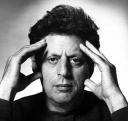
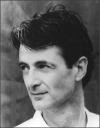
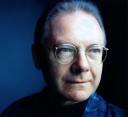
OK, so I made this little picture quiz for some friends in Vienna, but I thought I would throw it open as well. So if anyone’s reading this and wants to have a go at identifying the 20 artists/groups shown, please send me your answers using the form below. They are all artists I enjoy listening to and admire.

I’ll post the answers on 8 April and say who got the highest score. No prizes except the glow of satisfaction.

Update: No-one was interested. Ah well.

1. 1

2. 2

3. 3

4. 4

5. 5

6. 6

7. 7

8. 8

9. 9

10. 10

11. 11

12. 12

13. 13

14. 14

15. 15

16. 16

17. 17

18. 18

19. 19

20. 20